









Two years ago, I was asked by Scott Swofford and Derek Marquis to produce an original BYUtv documentary film about Handel’s MESSIAH. Thrilled was the best word I could use to describe it. BYUtv has made some wonderful one-off specials and successful program series such as Studio C, American Ride and Granite Flats. My hat is off to them for their bold efforts to produce content which appeals to wide audiences of any faith. They are definitely advocates of their own mantra, “See the Good in the World.”
The challenge I felt, as I tackled any new film project, was to produce content which would hold up to their standards as this was touted as “an original BYUtv production.” Two years earlier, we produced FIRES OF FAITH for them and it was received very well, but each new show holds its own dynamics. Mark Goodman and I felt we could do it again with the story of George Frideric Handel and the message of the oratorio, ‘MESSIAH.’ We soon realized that this would become another challenging filmmaking effort.
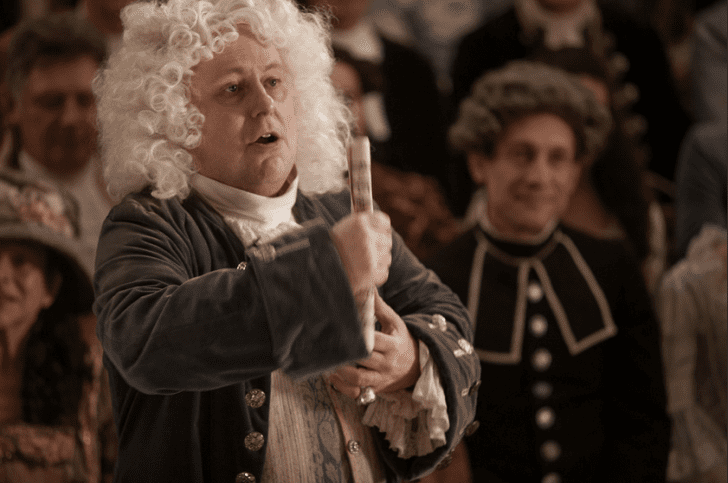
It was a very enlightening experience to learn the details of his life. My respect for the man and his craft, soared as the research and writing (written by Mitch Davis) began to reveal to me an incredible story. This German child prodigy, turned Italian opera composer and then England’s most celebrated composer, composed operas , cantatas, and oratorios on three continents. He ended his successful opera career at a financial low and then composed the music for the most celebrated piece of music, perhaps in the history of musicdom. Therein began our challenges
Challenge #1
How does one capture the essence of MESSIAH and illustrate its universal appeal? This is a story about the Savior of the world, set to music. How does one do justice to a piece of music whose storyline is the life of Jesus Christ? How do we illustrate the message of redemption and peace and hope? How do we craft the story so that the average viewer can find a place in his/her life that can relate to the central message of MESSIAH? Fortunately, we had some pretty good music to work with, but how does one illustrate that with unknown talent and in more than a dozen venues and in three countries?
Challenge #2
The details of his life and others close to him revealed personal challenges which many of us can relate to; financial difficulties, depression and even challenges within a marriage. Where do we place the emphasis? How much time should be spent on the real life challenges of our three main characters, George Frideric Handel the composer, Susannah Cibber the actress and singer, and Charles Jennens the librettist? It became a balancing act between the three characters of the story and the central figure, Jesus Christ.
Challenge #3
The Challenge That Wasn’t. Our style of filmmaking includes dramatic re-creations, neutral narration, and engaging scholars who help tell us the historical details of the story. I feared that our scholars would focus only on the historicity of the story. What happened was humbling. The scholars represented varied backgrounds; among the dozen or so, one was Lutheran, another, Episcopalian, another, Church of England, and even a “non-Christian.” All of the scholars were reserved about “spiritual” topics as they are trained to be, but as each interview progressed, they would seemingly let their guard down and come up with some beautiful faith-promoting gems of thought. And where our religious figures unashamedly bore testimony to the Atonement, to principles of Faith, Hope, Charity, the power of the Resurrection and Salvation, and especially Redemption, etc., our academic scholars also bore stirring “academic testimony” to the message of MESSIAH. That was a pleasant but almost universal surprise.
Challenge #4
Another challenge that wasn’t. This program was created for BYUtv as an original production. It is their show. How much leeway would we have in its filming? There might have been the fear on my part of “big brother is watching” in its production. What happened was, big brother was watching and the executive producers, Derek Marquis, Scott Swofford and Terri Pappas took an active role in sharing opinions and observations. In every instance, their observations only served to improve the show. That is a pretty good challenge for which I was grateful.
When one takes on a well-known topic and tries to make it entertaining and enlightening, he bears a terrible burden. Virtually everyone has heard the Hallelujah Chorus. Will everyone like the show? Will it stand the test of time? Will it inspire those of faith or no faith at all? Will it “see the good in the world?” It was challenging, but it was even more rewarding to learn of the genesis of the most celebrated oratorio in history. We carefully did our best to lend the dignity to those whose story we told and especially to Him whose story this oratorio celebrated.






Garfield & Margo CookDecember 16, 2014
Again, Lee and his team have done a marvelous job in capturing the essence of Handel's work and the setting for the Messiah, giving all of us a better understanding and love for his music and the lyrics inspired by Isaiah. Many thanks.
Laurel GallegosDecember 16, 2014
I loved this movie. The story was well done and I loved the scenes of the music sung in many different countries and languages. When I read the scriptures this was taken from, I always hear the music in my head. So much more meaning! Thanks for doing such a great job.